
RF Welding Services in Chilliwack, BC
Industrial-grade high-frequency welding stronger seams, hermetic bonds, and a finish that speaks for itself.
When a seam fails in the field, the whole product fails. Whether you’re looking at a cover that’s splitting at the edge, an inflatable that won’t hold pressure, or industrial fabric that’s delaminating at the bond line, the culprit is usually the same: the weld wasn’t strong enough to begin with. Delange’s Industries has added high-frequency RF welding to our fabrication operation in Chilliwack giving customers across the Fraser Valley access to molecular-level bonding that outlasts the material it joins. Kyle Delange and the team are ready to put it to work on your project.
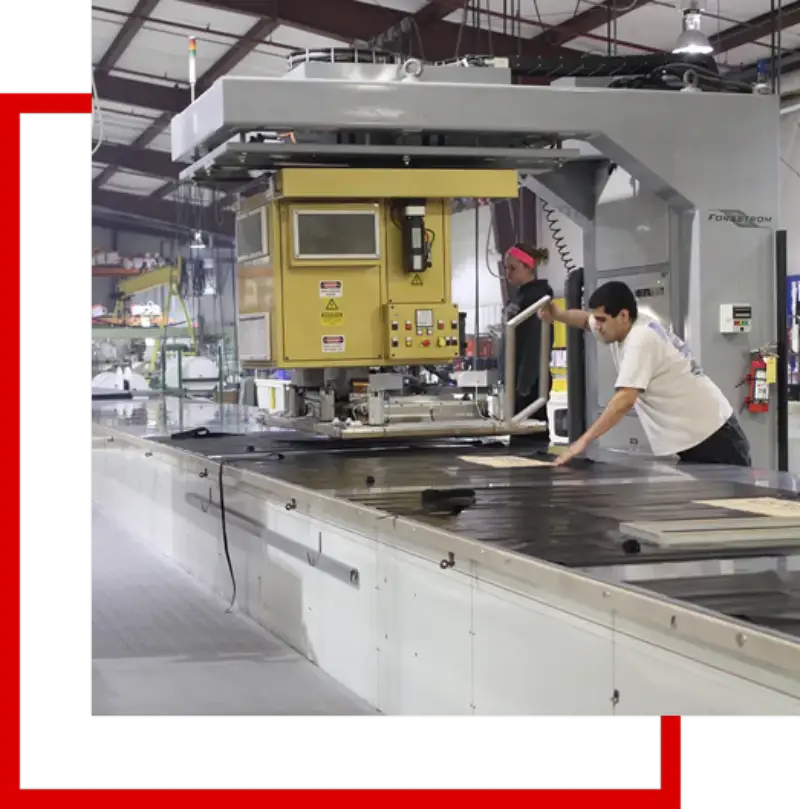
- 18+ Years in Fabrication
- Chilliwack & Abbotsford, BC
- Hermetically Sealed RF Welds
- Industrial-Grade Equipment
- Get a Quote Today
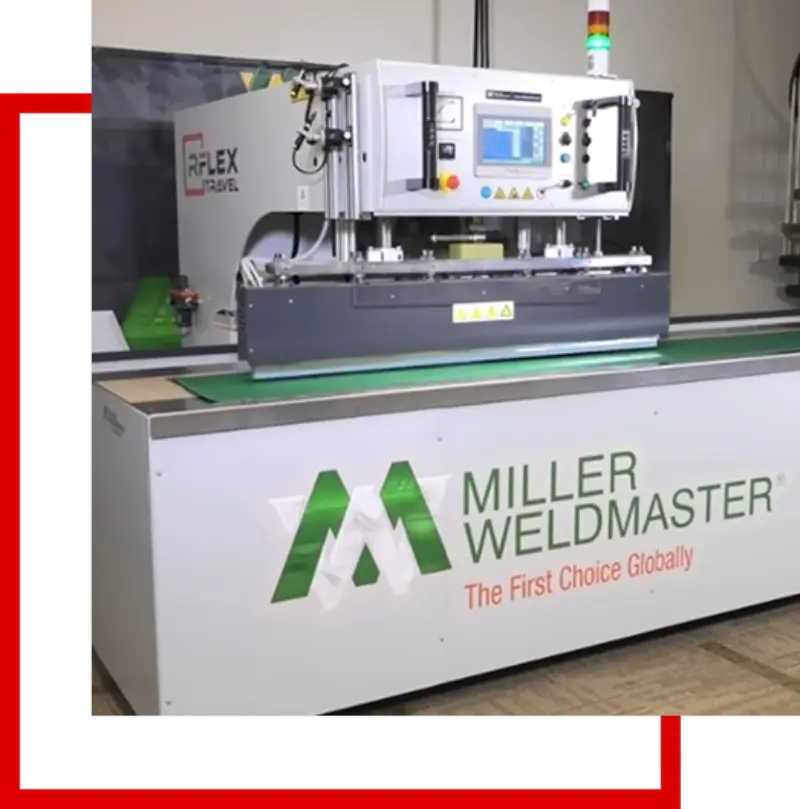
What Is RF Welding?
RF welding also called high-frequency welding or dielectric welding is a bonding process that uses electromagnetic energy to fuse thermoplastic materials from the inside out. The difference between RF welding and conventional heat sealing comes down to where the heat comes from. With heat sealing, you’re applying heat to the outside surface of the material. With RF welding, the electromagnetic field drives energy through the molecular structure of both layers simultaneously, generating heat within the material and creating a fusion bond that runs the full depth of the weld zone.
That changes what the joint can actually do. A heat-sealed seam is a surface bond two materials stuck together at the face. An RF weld is a molecular bond two materials that have become one continuous structure. There’s no interface to delaminate, no surface to peel, no gap for moisture to find. If something is going to fail in the finished product, it won’t be at the seam.
The Technology Behind the Bond
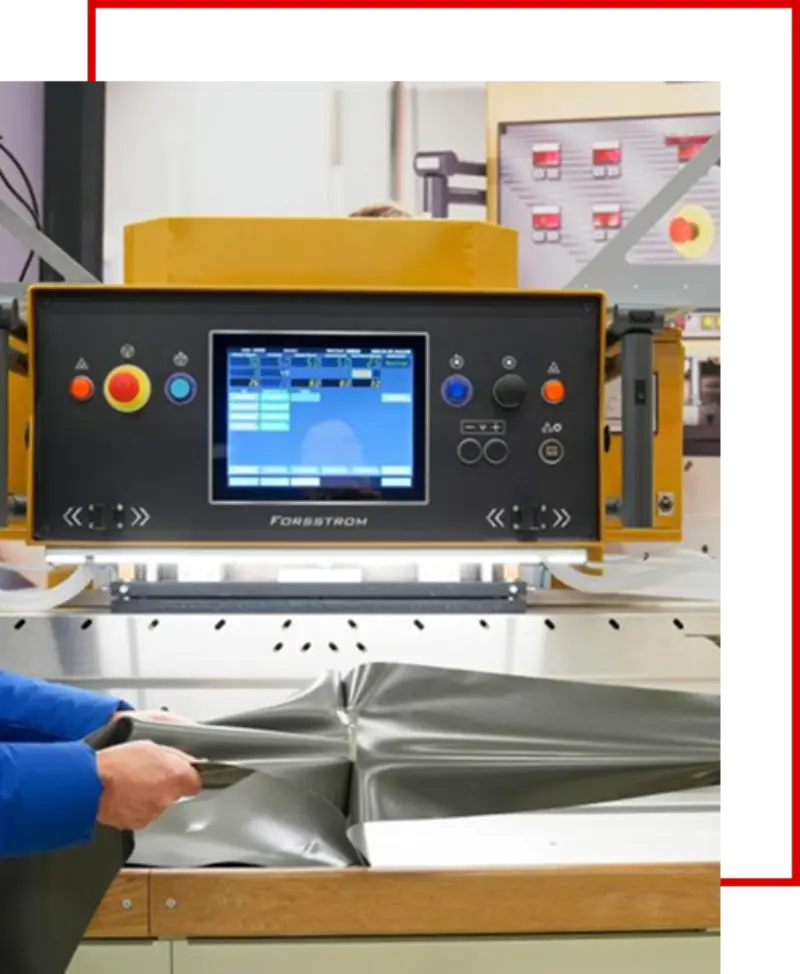
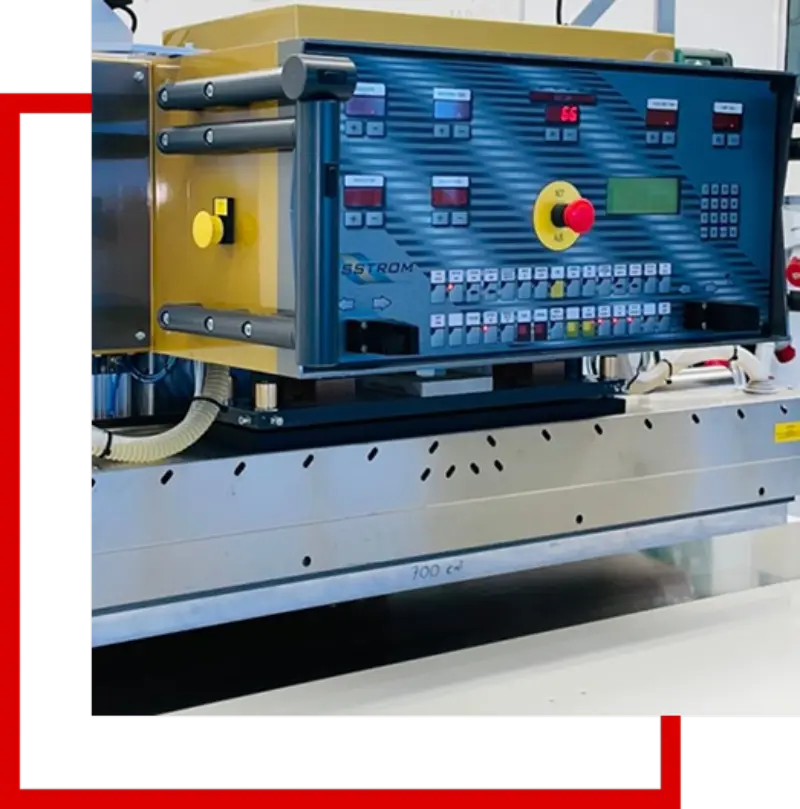
RF welding works by passing a high-frequency electromagnetic field operating at 27.12 MHz through thermoplastic materials positioned between two electrodes. The alternating field causes the polar molecules within the thermoplastic to oscillate rapidly, generating heat internally rather than from an outside source. As the material heats from within, the two layers soften and merge under pressure from the electrode tooling. When the field is removed and the material cools, the result is a monolithic joint that’s structurally continuous with the base material itself.
Compatible materials include PVC, polyurethane, nylon, and other polar thermoplastics with suitable dielectric properties. Non-polar materials polyethylene, polypropylene, and similar polymers are not RF weldable. If you’re working with a material and you’re not sure whether it’s compatible, bring us a sample or call and describe it. We’ll give you a straight answer before you commit to anything.
Why RF Welding Outperforms Standard Sealing
Heat sealing does a job. RF welding does it better and here’s the specific difference for each thing your product actually has to do.
Structurally Superior RF Welds
RF welds don’t bond the surfaces of two materials they merge the materials themselves at the molecular level. The molecular structure of both layers fuses into a continuous joint, and that joint consistently tests stronger than the surrounding base material. That means when your product is under load, under flex, or under impact, the seam isn’t the weak point anymore the rest of the material is. For industrial products that go into demanding environments, structurally superior RF welds are the baseline requirement, not an optional upgrade.
Hermetically Sealed with High-Frequency Welding
High-frequency welding produces a zero-porosity seam. There are no microchannels, no surface gaps, no intermolecular voids where liquid or gas can migrate through the bond zone. That hermetic sealing is built into the weld itself not a coating applied afterward, not a sealant that ages out under UV or mechanical stress. For inflatable structures, fluid containment applications, weatherproof covers, and any product that needs to hold pressure or exclude moisture reliably over time, the hermetic seal you get from high-frequency welding isn’t reproducible by conventional surface sealing methods.
Visually Flawless RF Welding Services
Precision electrode tooling means that RF welding services produce a seam with consistent width, clean edges, and zero heat distortion to the surrounding material. No burn marks. No irregular bead. No thermal stress on the face of your product. For finished goods where appearance is part of the value proposition branded industrial covers, promotional inflatables, display products, anything that goes in front of a customer a clean RF weld is also a direct statement about the quality of everything else in the product.
Industries We Serve
structures
Why Delange's Industries?
We didn’t set out to become an RF welding shop. We set out to solve the fabrication problems our customers kept bringing through the door, and after 18+ years in Chilliwack, we’ve learned that most of those problems come back to two things: the material wasn’t right for the application, or the method used to join it wasn’t strong enough for what it needed to do.
Adding RF welding capability to our operation wasn’t a marketing move. It was the answer to a real gap. Our customers businesses in the Fraser Valley working with industrial materials, covers, inflatables, and structural fabric products needed a bonding option that could match the durability their applications actually demanded. Now we can offer it in-house, alongside our existing fabrication, hydraulic hose, and industrial supply capabilities.
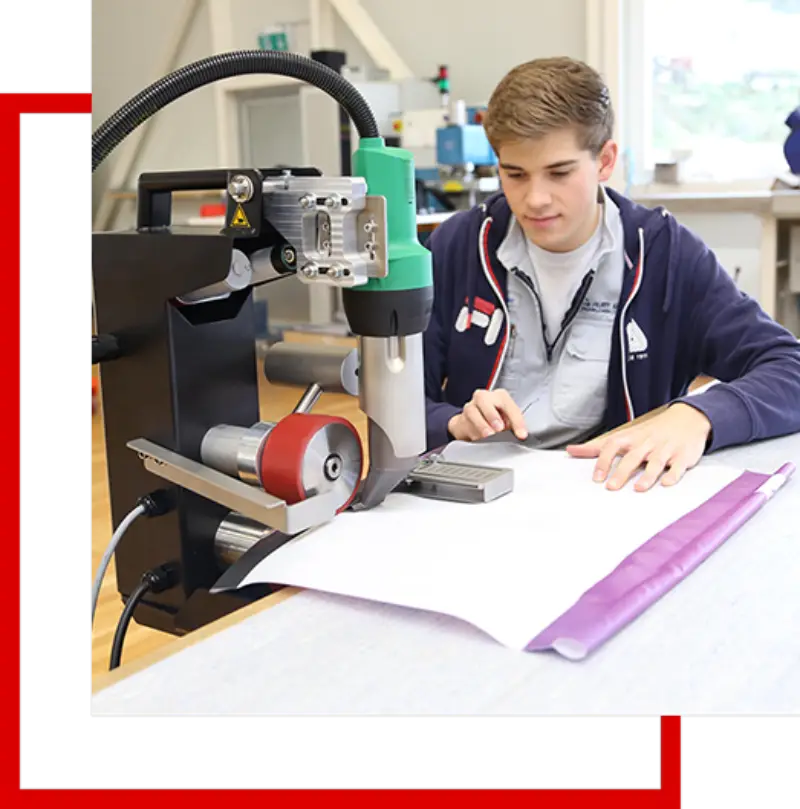
What that means practically: you’re not dealing with a specialty RF welding shop that only knows one process and hands you back a single component. You’re dealing with an industrial fabrication operation that understands the whole product, can handle multiple processes in one location, and has 18+ years of experience knowing what materials need to do in real working conditions out in the Fraser Valley, on job sites, in agricultural and industrial environments where things actually get used hard.
Kyle Delange and the team are here Monday through Friday. If you’ve got a project and you’re not sure whether RF welding is the right approach, call us and describe what you’re trying to build. We’ll tell you straight.
Also Serving These Fraser Valley Communities
Delange’s Industries operates out of Chilliwack and Abbotsford, and we work with customers throughout the Fraser Valley. If you’re in any of the areas below, we can help.
RF Welding FAQ
What materials can be RF welded at Delange's Industries?
RF welding works with thermoplastics that have suitable dielectric properties. PVC and polyurethane are the most common, and nylon and other polar polymers are also compatible depending on the specific application. Non-polar materials like polyethylene and polypropylene are not RF weldable. If you’re working with a material and you’re not sure whether it qualifies, bring us a sample or call and describe it we’ll give you a straight answer before you go any further.
How is RF welding different from heat sealing or ultrasonic welding?
Heat sealing applies heat from outside the material and creates a surface bond. Ultrasonic welding uses vibration. RF welding uses an electromagnetic field to generate heat from within the molecular structure of the thermoplastic itself the bond forms throughout the full depth of the weld zone, not just at a surface interface. RF welds consistently test stronger than the base material and produce hermetically sealed seams with zero porosity, which heat sealing cannot reliably achieve.
What products can be made with your RF welding equipment?
industrial tarps and covers, inflatable structures, agricultural liners, automotive components, custom fabricated industrial products.
Do you offer RF welding for businesses outside Chilliwack and Abbotsford?
This is a dummy title and will be replaced with original data.This is a dummy title and will be replaced with original data.This is a dummy title and will be replaced with original data.This is a dummy title and will be replaced with original data.
How do I get a quote for an RF welding project?
Call us or fill in the contact form on this page. Tell us the material you’re working with, the dimensions, the seam configuration, and what the finished product needs to do in use. We’ll get back to you with a direct answer on whether RF welding is the right process and what it’ll cost. No vague estimates if we can’t give you a clear number, we’ll tell you why.
Is RF welding suitable for heavy industrial and outdoor applications?
Yes. RF welds produce hermetically sealed, molecularly bonded seams that consistently test stronger than the surrounding material. For products that face UV exposure, mechanical stress, pressure differentials, moisture, and harsh outdoor conditions covers, inflatables, structural fabric products RF welding is the superior bonding method. It’s not the right process for every material, but for polar thermoplastics used in demanding applications, it’s the one you want.
Other Services at Delange's Industries
RF welding is one of several fabrication and industrial services we offer out of our Chilliwack and Abbotsford shops. Whether your project involves hydraulic hose fabrication, industrial supplies, or custom fabrication work of any kind, we handle it in-house. There’s no benefit to dealing with three different shops when one operation can cover the whole job.
Get a Quote on RF Welding in Chilliwack, BC
Have a project that needs a stronger bond than heat sealing can deliver? We’re in Chilliwack and we’re taking on RF welding jobs now. Tell us the material, the dimensions, and what the finished product needs to do in the field and we’ll give you a straight answer on process, timeline, and cost. That’s how it works here.